Is your website struggling to rank on Google despite publishing quality content and targeting the right keywords? Are visitors leaving because your pages load slowly, links are broken, or your website does not work properly on mobile devices?
These problems can affect your website’s search visibility, user experience, and ability to generate leads.
Many businesses focus only on keywords, backlinks, and content marketing while ignoring the technical foundation of their websites. Unfortunately, even a well-designed website with valuable content can struggle to perform in organic search if search engines cannot efficiently crawl, understand, and index its pages.
This is where professional Technical SEO Services become essential.
Technical SEO helps identify and resolve website issues that may prevent search engines from accessing, understanding, and displaying your content in search results. It also focuses on website performance, mobile usability, site structure, security, and other important technical elements.
At BrandLiftSEO, we help businesses strengthen their website foundations through practical, data-driven SEO strategies. Our approach focuses on identifying technical problems, prioritizing important fixes, and improving the overall search performance of your website.
Whether you operate a business website, ecommerce store, blog, or large corporate platform, the right technical SEO strategy can help create a healthier website and support long-term organic growth.
What Are Technical SEO Services?
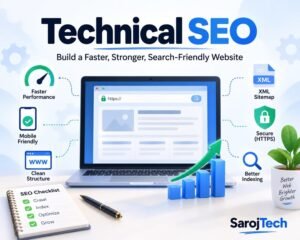
Technical SEO Services involve optimizing the technical structure and performance of a website so search engines can crawl, render, understand, and index its pages more effectively.
Unlike content SEO, which focuses on improving website text and information, technical SEO focuses on the underlying elements that support website accessibility, performance, and search engine understanding.
For example, imagine publishing an excellent blog that answers an important customer question. However, the page is accidentally blocked from search engine crawling through a robots.txt rule or a noindex directive.
Your content may be useful, but search engines may not be able to index it as intended.
Technical optimization helps identify and resolve such problems.
Professional Technical SEO Services may include:
- Technical SEO audits
- Website crawling and indexing analysis
- XML sitemap optimization
- Robots.txt configuration review
- Website speed optimization
- Core Web Vitals analysis
- Mobile SEO optimization
- URL structure optimization
- Canonical tag implementation
- Duplicate content checks
- Structured data optimization
- HTTPS and website security checks
- Redirect and broken link management
- Internal linking analysis
- JavaScript SEO
- International SEO technical support
The objective is to create a technically healthy website that provides a better experience for users and makes important content accessible to search engines.
Why Does Your Website Need Technical SEO?
A website can have attractive designs, useful content, and valuable products but still experience technical problems that affect its performance.
For example, pages may load slowly, important URLs may not be indexed, duplicate versions may create confusion, or mobile users may face navigation problems.
These issues can limit your website’s ability to compete effectively in search results.
Professional Technical SEO Services help businesses identify these problems and build a stronger technical foundation.
Here are some important reasons why technical SEO matters.
1. Improve Search Engine Crawling
Search engines use automated programs called crawlers to discover website pages and follow links.
If your website has poor internal linking, unnecessary redirects, broken URLs, or incorrect crawling directives, search engines may have difficulty discovering important content.
A technical SEO audit helps identify crawling barriers and improve website accessibility.
2. Help Important Pages Get Indexed
Crawling and indexing are different processes.
Crawling means that a search engine accesses a page. Indexing means that it processes and stores information about the page so it may appear in search results.
A page can be crawled without being indexed.
Technical SEO Services help identify issues such as accidental noindex tags, incorrect canonical URLs, duplicate pages, and indexing restrictions.
Fixing these problems can help search engines understand which pages should be considered for indexing.
3. Improve Website Loading Speed
Website speed is important for user experience.
Visitors may become frustrated when pages take too long to load, especially when browsing product pages or filling out enquiry forms.
Technical optimization can address issues such as large images, unnecessary scripts, poor caching, and inefficient website resources.
4. Improve Mobile User Experience
Many people access websites using smartphones and tablets.
If your website has small text, difficult navigation, overlapping elements, or slow mobile loading, visitors may struggle to use it.
A mobile-friendly website provides a smoother experience across different screen sizes.
5. Fix Hidden Website Errors
Some technical SEO problems are not immediately visible to website visitors.
Examples include:
- Broken internal links
- Incorrect redirects
- Duplicate URLs
- Missing canonical tags
- Blocked resources
- Incorrect sitemap entries
- Server errors
- Indexing restrictions
Regular Technical SEO Services help identify these hidden issues before they affect a larger portion of your website.
6. Build a Strong Foundation for Other SEO Activities
Content optimization and link building are important, but they work best when your website has a reliable technical foundation.
If important pages cannot be crawled or indexed properly, your content strategy may not achieve its full potential.
Technical SEO supports the broader SEO process by improving the accessibility and structure of your website.
Our Complete Technical SEO Services
At BrandLiftSEO, we focus on important technical optimization activities that help websites improve their technical health and organic search performance.
Our Technical SEO Services can be customized according to your website platform, size, industry, and business objectives.
Here are the major areas of technical optimization.
1. Comprehensive Technical SEO Audit
A technical SEO audit is the first step towards understanding your website’s technical condition.
It helps identify problems that may affect crawling, indexing, performance, and website usability.
Our audit process may include:
- Website crawling analysis
- Indexing status review
- Technical error identification
- Broken link analysis
- Redirect checks
- Sitemap evaluation
- Robots.txt review
- Canonical tag checks
- Mobile usability review
- Website speed analysis
- Structured data validation
- HTTPS security review
We organize findings according to their potential impact and implementation priority.
For example, an important service page blocked from indexing may require more immediate attention than a minor image naming issue.
A detailed audit helps create a clear action plan instead of making random website changes.
2. Website Crawling and Indexing Optimization
Crawling and indexing are fundamental parts of organic search visibility.
If search engines cannot discover your pages or process them correctly, those pages may struggle to appear in relevant search results.
Our Technical SEO Services include reviewing important crawling and indexing signals.
This may involve:
- Identifying blocked website pages
- Reviewing robots.txt rules
- Checking noindex directives
- Analyzing crawl errors
- Reviewing internal links
- Identifying orphan pages
- Checking indexable URLs
- Reviewing server response codes
- Analyzing Google Search Console indexing reports
An orphan page is a page that has no internal links pointing to it from other pages on your website.
Such pages may be harder for crawlers and users to discover.
We also review whether important pages are accessible through logical website navigation.
The objective is to make important content easier to discover and process.
3. XML Sitemap Optimization
An XML sitemap provides search engines with information about the important URLs on your website.
It can help search engines discover pages, especially on large websites or websites with complex structures.
However, simply creating a sitemap does not guarantee indexing.
Our sitemap optimization process may include:
- Reviewing sitemap structure
- Identifying invalid URLs
- Removing unnecessary redirected URLs
- Excluding non-indexable pages
- Checking canonical URL consistency
- Reviewing sitemap updates
- Submitting the sitemap through Google Search Console
A clean XML sitemap helps communicate which URLs you consider important.
For larger websites, separate sitemaps may be useful for different content types, such as products, blogs, and categories.
4. Robots.txt Optimization
The robots.txt file provides crawling instructions to search engine crawlers.
Incorrect configuration can unintentionally prevent search engines from accessing important website resources or pages.
For example, a website may accidentally block an important directory containing valuable landing pages.
Our Technical SEO Services include reviewing robots.txt configuration to identify potentially harmful rules.
This process may include:
- Checking blocked directories
- Reviewing important URL paths
- Identifying conflicting directives
- Checking sitemap references
- Reviewing staging website restrictions
- Ensuring important resources remain accessible
It is important to understand that robots.txt is not a security mechanism and does not guarantee that a URL will stay out of search results.
Sensitive information should be protected through appropriate access controls.
5. Website Speed Optimization
Website speed can affect how visitors experience your website.
Slow-loading pages can create frustration, reduce engagement, and make important actions more difficult.
Our website speed optimization approach may include:
- Image compression
- Modern image formats
- Browser caching recommendations
- Server response time analysis
- JavaScript optimization
- CSS optimization
- Unnecessary script reduction
- Font loading optimization
- Lazy loading implementation
- Content delivery network recommendations
We also analyze performance using tools such as Google PageSpeed Insights and Lighthouse.
The objective is to identify performance bottlenecks and recommend practical improvements.
Speed optimization should be tested carefully because aggressive changes can sometimes break website layouts or functionality.
6. Core Web Vitals Optimization
Core Web Vitals are Google’s user experience metrics that assess important aspects of page performance.
The three primary Core Web Vitals are:
Largest Contentful Paint (LCP): Measures how quickly the largest visible content element loads. A good LCP result is 2.5 seconds or less.
Interaction to Next Paint (INP): Measures responsiveness to user interactions. A good INP result is 200 milliseconds or less.
Cumulative Layout Shift (CLS): Measures unexpected visual movement during page loading. A good CLS result is 0.1 or less.
Our Technical SEO Services may include:
- LCP performance analysis
- INP responsiveness checks
- CLS issue identification
- Image loading improvements
- JavaScript performance review
- Layout stability recommendations
- Mobile performance testing
Improving these metrics can contribute to a better user experience.
However, achieving good Core Web Vitals scores does not automatically guarantee higher Google rankings.
7. Mobile SEO Optimization
A website must work properly across different devices.
Mobile optimization is especially important because Google primarily uses the mobile version of a website’s content for indexing.
Our mobile technical optimization process may include:
- Responsive website checks
- Mobile navigation testing
- Text readability analysis
- Button and link accessibility
- Mobile page speed review
- Image responsiveness
- Layout consistency
- Mobile content accessibility
We also check whether important content and metadata are available on the mobile version of your website.
A technically optimized mobile website helps users browse information, explore services, and complete important actions more easily.
8. Website Architecture and URL Structure Optimization
Website architecture describes how pages are organized and connected.
A clear structure helps users navigate your website and helps search engines understand the relationships between pages.
For example, a digital marketing website may follow this structure:
- Homepage
- Digital Marketing Services
- SEO Services
- Technical SEO Services
- Local SEO Services
- Ecommerce SEO Services
- Blog
- Contact Us
Our Technical SEO Services may include:
- Website hierarchy review
- URL structure optimization
- Category organization
- Navigation improvement
- Breadcrumb implementation
- Internal linking analysis
- Orphan page identification
We recommend short, descriptive, readable URLs that clearly communicate page topics.
Avoid unnecessary URL parameters and confusing structures wherever possible.
9. Canonical Tag Optimization
Canonical tags help communicate the preferred version of a page when similar or duplicate URLs exist.
For example, an ecommerce website may generate different URLs for the same product due to filters, sorting options, or tracking parameters.
Without appropriate canonicalization, search engines may have difficulty understanding which version should be treated as the primary page.
Our Technical SEO Services include:
- Canonical tag checks
- Self-referencing canonical review
- Duplicate URL analysis
- Canonical and redirect consistency
- Pagination considerations
- Parameter-based URL review
Canonical tags are signals rather than absolute commands, so search engines may select a different canonical URL when other signals conflict.
10. Duplicate Content Identification and Fixes
Duplicate content occurs when identical or substantially similar content appears at multiple URLs.
It can happen because of:
- Multiple URL versions
- HTTP and HTTPS variations
- WWW and non-WWW versions
- URL parameters
- Duplicate product descriptions
- Similar category pages
- Incorrect website migrations
Duplicate content does not automatically result in a Google penalty, but it can create indexing and canonicalization challenges.
Our technical SEO process identifies unnecessary duplication and recommends suitable solutions such as canonical tags, redirects, or content improvements.
11. Structured Data and Schema Markup
Structured data helps search engines understand information on your website in a more organized format.
Depending on the page and its content, relevant schema types may include:
- Organization
- LocalBusiness
- Article
- BreadcrumbList
- Product
- Service
- Event
- FAQPage, where applicable and eligible
Our Technical SEO Services include reviewing structured data implementation and identifying errors or inconsistencies.
Valid structured data may help eligible pages qualify for enhanced search appearances.
However, adding schema does not guarantee rich results.
The markup must accurately represent visible page content and follow the relevant search engine guidelines.
12. HTTPS and Website Security
Website security is essential for protecting visitors and maintaining a trustworthy browsing experience.
HTTPS encrypts information exchanged between a user’s browser and your website.
Our technical review may include:
- SSL certificate checks
- HTTPS implementation
- HTTP-to-HTTPS redirects
- Mixed content identification
- Secure resource loading
- Redirect consistency
- Security-related configuration review
An incorrectly configured HTTPS migration can create duplicate URLs, broken resources, and redirect problems.
Proper testing helps reduce these risks.
13. Broken Links and Redirect Management
Broken links can prevent users and search engine crawlers from accessing important pages.
Redirects are also important when changing URLs, deleting pages, or migrating websites.
Our Technical SEO Services include:
- Broken internal link identification
- External link checks
- 301 redirect review
- Redirect chain identification
- Redirect loop checks
- 404 page analysis
- URL migration planning
A 301 redirect is commonly used when a page has permanently moved to a new URL.
However, redirects should point users to relevant replacement pages rather than unrelated destinations.
14. JavaScript SEO
Modern websites often use JavaScript frameworks to display content and interactive features.
Although Google can render JavaScript, rendering may involve additional processing.
Problems can occur when important content is not accessible or rendered correctly.
Our JavaScript SEO analysis may include:
- Rendered HTML inspection
- Content accessibility checks
- JavaScript rendering analysis
- Internal link checks
- Lazy-loaded content review
- Client-side navigation analysis
- Structured data rendering checks
The objective is to make important content and links accessible to search engines while maintaining a smooth user experience.
15. International and Multilingual Technical SEO
Businesses targeting multiple countries or languages may need additional technical SEO configuration.
Incorrect language targeting can create confusion for users and search engines.
Our Technical SEO Services may include:
- International URL structure review
- Hreflang implementation checks
- Language-specific page mapping
- Country targeting recommendations
- Canonical consistency
- Multilingual sitemap review
Hreflang annotations help communicate language and regional URL alternatives.
They should be implemented consistently and point to valid alternate pages.
16. Website Migration SEO
Changing your domain, redesigning your website, switching platforms, or modifying URL structures can create SEO risks.
A poorly planned migration may result in broken links, lost redirects, indexing problems, and reduced organic visibility.
Our migration-focused Technical SEO Services may include:
- Pre-migration SEO audit
- Existing URL mapping
- Redirect planning
- Sitemap preparation
- Canonical tag checks
- Robots.txt review
- Internal link updates
- Post-migration crawling
- Search Console monitoring
We recommend testing the migration on a staging environment before making changes live.
A proper migration plan can help reduce avoidable technical issues.
Common Technical SEO Mistakes That Can Hurt Your Website Rankings
Many businesses unknowingly make technical mistakes that create unnecessary SEO challenges.
Here are some common issues you should avoid.
1. Blocking Important Pages from Crawling
Incorrect robots.txt rules may prevent search engines from accessing important sections of your website.
Always review crawling instructions before making changes.
2. Accidentally Adding Noindex Tags
A noindex directive tells search engines not to include a page in their index.
If this directive is accidentally added to an important landing page, it can prevent that page from appearing in search results.
3. Ignoring Website Speed
Large images, unnecessary scripts, and poor server performance can create slow-loading pages.
Regular performance testing helps identify areas for improvement.
4. Using Incorrect Redirects
Redirecting every deleted page to the homepage may confuse users and search engines.
Use relevant redirects when a suitable replacement page exists.
5. Ignoring Mobile Optimization
A website that works well on desktops but poorly on smartphones can create a frustrating user experience.
Test your important pages on different screen sizes.
6. Creating Duplicate URLs
URL parameters, multiple domain versions, and incorrect canonical tags can create unnecessary duplicate pages.
Review your URL structure and canonicalization strategy regularly.
7. Neglecting XML Sitemaps
Outdated sitemaps containing redirected, broken, or non-indexable URLs can reduce their usefulness.
Keep your sitemap accurate and updated.
8. Ignoring Technical SEO Audits
Technical problems can appear after website updates, plugin installations, migrations, and development changes.
Regular Technical SEO Services and technical reviews help identify issues before they become larger problems.
Technical SEO vs On-Page SEO vs Off-Page SEO
SEO consists of different activities that work together to improve organic search visibility.
Understanding the differences can help you choose the right optimization strategy.
| SEO Type | Main Focus | Common Activities |
| Technical SEO | Website infrastructure and accessibility | Crawling, indexing, speed, sitemaps, schema |
| On-Page SEO | Website content and page relevance | Keywords, headings, meta tags, content optimization |
| Off-Page SEO | Website authority and external signals | Backlinks, digital PR, brand mentions |
Technical SEO creates the foundation, On-Page SEO improves page relevance, and Off-Page SEO helps strengthen website authority.
A balanced strategy considers all three areas.
How Much Do Technical SEO Services Cost in India?
The cost of Technical SEO Services in India depends on website size, technical complexity, platform, industry competition, and the scope of work.
A small business website may need a basic technical audit and a limited number of fixes.
A large ecommerce website may require advanced crawling analysis, JavaScript SEO, structured data reviews, and ongoing technical monitoring.
Some important pricing factors include:
- Number of website pages
- Website platform
- Existing technical issues
- Website migration requirements
- Ecommerce functionality
- JavaScript framework usage
- Number of target locations
- Ongoing monitoring requirements
- Development support requirements
Before selecting an agency, understand what its technical SEO package includes.
Ask whether the service covers only the audit or also includes implementation support, testing, and reporting.
The best choice is not necessarily the cheapest service. Look for a provider that explains problems clearly and prioritizes fixes according to business impact.
Why Choose BrandLiftSEO for Technical SEO Services?
Choosing the right SEO partner is important because technical changes can affect the performance and accessibility of your entire website.
At BrandLiftSEO, we focus on identifying technical challenges and recommending practical improvements based on your website’s requirements.
Here are some reasons to consider our approach.
1. Customized Technical SEO Strategy
Every website has a different structure, platform, and set of technical requirements.
We focus on understanding your website before recommending changes.
2. Complete Website Technical Analysis
Our approach considers important areas such as crawling, indexing, page speed, mobile usability, website structure, and structured data.
3. Focus on High-Priority Issues
Not every technical issue has the same impact.
We help organize recommendations according to their potential effect on website accessibility, performance, and business objectives.
4. Practical Optimization Recommendations
Technical reports should be easy to understand and useful for implementation.
We aim to explain identified issues, their possible impact, and the recommended solutions.
5. Data-Driven SEO Approach
We use relevant website and search performance information to evaluate issues and monitor progress.
6. Long-Term Website Health
Technical SEO is not a one-time activity.
Regular reviews help identify new issues that may appear after website updates, redesigns, migrations, or content additions.
With professional Technical SEO Services, businesses can work towards building a stronger technical foundation for long-term organic growth.
Our Technical SEO Process
A structured approach makes it easier to identify, prioritize, and resolve website problems.
At BrandLiftSEO, our recommended process includes the following steps.
Step 1: Website Technical Audit
We review your website to identify crawling, indexing, performance, security, and structural issues.
Step 2: Problem Identification
We analyze audit findings and identify the issues that may be affecting important pages.
Step 3: Issue Prioritization
We organize problems according to their potential impact and implementation difficulty.
Step 4: Technical Optimization
We recommend or implement suitable improvements related to website speed, indexing, redirects, sitemaps, canonical tags, and other technical elements.
Step 5: Testing and Validation
After changes are implemented, we check whether the issues have been resolved without creating new website problems.
Step 6: Monitoring and Reporting
We monitor technical performance, indexing information, and relevant SEO indicators to identify future opportunities.
Tools Used for Technical SEO Analysis
Professional technical analysis often involves multiple tools because no single platform provides every insight.
Some commonly used tools include:
Google Search Console
Google Search Console helps website owners monitor search performance, indexing information, sitemap submissions, and certain technical issues.
Google PageSpeed Insights
This tool provides performance analysis and Core Web Vitals information for supported pages.
Screaming Frog SEO Spider
This website crawler can help identify broken links, redirect issues, missing metadata, duplicate URLs, and other technical problems.
Google Lighthouse
Lighthouse provides automated audits covering performance, accessibility, SEO checks, and other website quality factors.
Ahrefs
Ahrefs provides website and backlink analysis features that can support technical SEO research.
Semrush
Semrush offers website auditing, keyword research, and other SEO analysis features.
Using these tools together can help create a more complete picture of website health.
Frequently Asked Questions About Technical SEO Services
1. What are Technical SEO Services?
Technical SEO Services involve optimizing a website’s technical structure so search engines can crawl, render, understand, and index its content more effectively. These services include website audits, indexing checks, speed optimization, mobile SEO, schema markup, and redirect management.
2. Why are Technical SEO Services important?
Technical SEO helps identify website problems that may affect search engine accessibility, indexing, performance, and user experience. It creates a strong foundation for other SEO activities.
3. How often should I perform a technical SEO audit?
The frequency depends on website size and how often changes are made. Many businesses benefit from periodic audits, while large or frequently updated websites may need more regular monitoring.
4. Can technical SEO improve Google rankings?
Technical SEO can help remove obstacles that affect crawling, indexing, and user experience. These improvements may support organic search performance, but rankings depend on many factors, including relevance, content quality, competition, and search intent.
5. What is included in a technical SEO audit?
A technical SEO audit may include crawling analysis, indexing checks, XML sitemap review, robots.txt analysis, website speed testing, Core Web Vitals evaluation, mobile optimization, canonical tag checks, structured data validation, and redirect analysis.
6. How long does technical SEO take to show results?
The timeline varies according to the type of issue, implementation speed, website size, and search engine processing. Some corrections may be recognized relatively quickly, while other improvements can take longer to influence search performance.
7. Are technical SEO services necessary for small businesses?
Yes. Small business websites can also experience broken links, indexing issues, slow pages, duplicate URLs, and mobile usability problems. Technical optimization can help maintain a healthy website foundation.
8. What are Core Web Vitals in SEO?
Core Web Vitals are Google’s user experience metrics covering loading performance, responsiveness, and visual stability. Their current primary metrics are LCP, INP, and CLS.
9. Can I do technical SEO without an SEO agency?
Yes. Website owners can use tools such as Google Search Console, PageSpeed Insights, and Lighthouse to identify certain technical issues. However, complex problems involving JavaScript, migrations, server configuration, and large websites may require experienced SEO and development support.
10. What is the difference between technical SEO and on-page SEO?
Technical SEO focuses on website infrastructure, crawling, indexing, speed, and accessibility. On-page SEO focuses on content, keywords, headings, metadata, and page relevance. Both contribute to an effective SEO strategy.
11. Do ecommerce websites need technical SEO?
Yes. Ecommerce websites often contain large numbers of product and category pages, filters, sorting parameters, and dynamic URLs. Technical SEO helps manage crawling, indexing, duplicate content, canonical tags, and website performance.
12. Does website speed affect SEO?
Website performance contributes to user experience, and Core Web Vitals are part of Google’s page experience considerations. However, speed alone does not guarantee higher rankings.
13. What is the role of structured data in technical SEO?
Structured data helps search engines understand information on a page. Depending on eligibility and implementation, it can help pages qualify for enhanced search appearances.
14. Can a website have good content but poor technical SEO?
Yes. A website can publish useful content while still experiencing crawling, indexing, speed, or mobile usability problems. This is why content optimization and technical SEO should work together.
15. How do I choose the best technical SEO agency?
Look for an agency that understands website architecture, crawling, indexing, performance, structured data, and technical implementation. Choose a provider that explains its recommendations clearly and offers transparent reporting without promising guaranteed rankings.
Final Thoughts: Build a Stronger Website with Expert Technical SEO Services
Your website is one of your most important digital assets. But even the best content and attractive designs may struggle to deliver results when important technical problems remain unresolved.
Poor indexing, slow loading pages, broken links, duplicate URLs, and mobile usability issues can create unnecessary barriers to organic search performance.
Professional Technical SEO Services help identify these problems, improve website accessibility, and create a stronger foundation for your overall SEO strategy.
At BrandLiftSEO, we focus on practical, customized, and data-driven technical optimization to help businesses improve their website health and search visibility.
Don’t let hidden technical errors hold your website back.
Ready to fix website issues and improve your SEO performance?
Contact BrandLiftSEO today to discuss your website requirements and discover the right technical SEO strategy for your business.