Introduction: Why Your Business Cannot Afford to Ignore SEO
Imagine having an excellent website, outstanding products, and valuable services, but potential customers cannot find your business on Google. You invest money in website development, create social media accounts, publish blogs, and run marketing campaigns, yet your website struggles to attract consistent visitors. This is one of the biggest challenges businesses face in today’s competitive digital marketplace.
Having a website is no longer enough. Your business needs visibility, credibility, and a strong online presence to compete successfully. This is where professional SEO Services become essential.
Search Engine Optimisation (SEO) is the process of improving your website so that search engines can understand its content, evaluate its relevance, and display it for appropriate search queries. A well-planned SEO strategy helps businesses attract organic traffic, reach potential customers, improve brand awareness, and generate more enquiries without depending entirely on paid advertisements.
Whether you operate a startup, local business, eCommerce store, professional agency, or established company, investing in SEO Services can create valuable long-term opportunities for sustainable growth.
However, poor optimisation, outdated techniques, keyword stuffing, and low-quality backlinks can damage your website’s performance. Instead of wasting your marketing budget on ineffective strategies, businesses should focus on ethical, data-driven, and customer-focused SEO practices.
In this comprehensive guide, we will explore how SEO works, why it matters, which optimization techniques deliver results, and how professional SEO strategies can help your business achieve better search engine rankings.
What Are SEO Services?
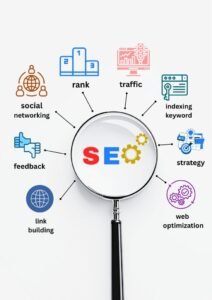
SEO Services are professional digital marketing solutions designed to improve a website’s visibility in search engine results pages (SERPs). These services involve optimizing different website elements, improving technical performance, creating useful content, building relevant backlinks, and strengthening the overall user experience.
The primary objective is to help search engines understand your website while ensuring that visitors find relevant and valuable information.
For example, imagine someone searches Google for “best digital marketing agency near me.” If your website offers relevant services and has been properly optimized, it has a better opportunity to appear in relevant search results.
Professional optimization is not about manipulating search engines. It is about creating a website that provides useful information, satisfies search intent, and makes it easier for customers to discover your business.
A complete SEO strategy may include:
- Keyword research and search intent analysis.
- On-page website optimization.
- Technical SEO improvements.
- High-quality content creation.
- Link-building strategies.
- Local search optimization.
- Competitor analysis.
- Website performance monitoring.
- Conversion rate optimization.
- SEO reporting and analytics.
Each activity contributes to a stronger digital presence. When these activities work together, businesses can improve their search visibility and build a reliable source of organic traffic.
Why Are SEO Services Important for Business Growth?
Online competition is increasing across almost every industry. Customers frequently use search engines to research products, compare services, discover local businesses, and make purchasing decisions.
If your website does not appear for relevant searches, your competitors may receive the attention and enquiries that could have reached your business.
Professional SEO Services help address this challenge by making your website easier to discover and more useful to your target audience.
Let’s understand the major benefits.
1. Improve Your Google Search Rankings
Search rankings influence how easily potential customers discover your website. Websites appearing prominently for relevant searches can receive more opportunities to attract visitors.
However, ranking improvements require consistent optimization, quality content, technical improvements, and a clear understanding of search intent.
A professional SEO strategy identifies relevant keywords and optimizes website pages around topics that matter to your audience.
For example, a digital marketing company may target keywords such as:
- Digital marketing agency.
- SEO company.
- Local SEO expert.
- Technical SEO Services.
- Website optimization services.
- Google Ads management.
The objective is not simply to rank for more keywords. It is to rank for searches that attract relevant visitors and potential customers.
2. Generate Consistent Organic Traffic
Paid advertisements can generate traffic quickly, but visitors may stop arriving when your advertising budget runs out.
Organic search provides another opportunity. With effective optimization, your website can continue attracting relevant visitors through search engines.
Well-executed SEO Services focus on building sustainable organic visibility rather than depending exclusively on paid marketing campaigns.
For example, a business publishing helpful articles about its products, services, and industry can attract visitors searching for those topics.
Over time, these pages may become valuable sources of organic traffic.
Remember that organic traffic does not automatically mean sales. Your website must also provide relevant information, clear navigation, trustworthy messaging, and effective calls to action.
3. Build Brand Awareness and Online Credibility
Customers generally want to research a business before contacting or purchasing from it.
When your website consistently appears for relevant searches and provides useful information, people become more familiar with your brand.
Professional SEO Services help businesses establish a stronger online presence through optimized service pages, educational content, local listings, and relevant industry resources.
Your website can become an important destination for customers researching your industry.
Credibility also depends on factors such as transparent business information, genuine customer reviews, accurate claims, and a professional website experience.
4. Reach Customers With Higher Purchase Intent
Not every website visitor is ready to purchase.
Some visitors are researching general information, while others are actively comparing providers or looking for a service immediately.
Understanding search intent helps businesses create content for different stages of the customer journey.
For example:
- Informational: What is search engine optimization?
- Commercial: Best SEO agency for small businesses.
- Transactional: Hire professional SEO Services.
- Navigational: BrandLiftSEO contact page.
Targeting relevant commercial and transactional searches can help businesses attract visitors who are closer to making purchasing decisions.
5. Improve Your Return on Marketing Investment
Digital marketing budgets should produce measurable business value.
One major advantage of SEO is that organic visibility can continue delivering traffic after the initial optimization and content investment.
However, SEO is not free. Businesses still need to invest in research, technical improvements, content production, tools, and ongoing maintenance.
A reliable SEO strategy focuses on measurable outcomes such as qualified traffic, leads, enquiries, and conversions rather than rankings alone.
Different Types of SEO Services Every Business Should Understand
Search engine optimization includes several interconnected activities. Each type addresses a different aspect of website performance.
Understanding these categories helps businesses identify optimization opportunities and develop a balanced strategy.
1. On-Page SEO Services
On-page SEO involves optimizing individual website pages to improve their relevance, clarity, and search visibility.
It focuses on elements that businesses can manage directly on their websites.
Important on-page optimization activities include:
Keyword Optimization: Identifying relevant primary and secondary keywords and using them naturally in page titles, headings, descriptions, URLs, and content.
Title Tag Optimization: Writing descriptive and engaging titles that accurately represent page content and encourage relevant clicks.
Meta Description Optimization: Creating useful summaries that explain what visitors can expect from a page.
Heading Structure: Organizing content using appropriate H1, H2, and H3 headings.
Internal Linking: Connecting related website pages to help visitors discover useful information and help search engines understand site structure.
Image Optimization: Using descriptive filenames, relevant alternative text, appropriate image dimensions, and modern formats.
Content Quality: Publishing original, informative, accurate, and useful content that satisfies user expectations.
Effective on-page SEO Services make website content easier for both search engines and visitors to understand.
2. Technical SEO Services
Technical SEO focuses on improving the technical foundation of a website so search engines can discover, crawl, render, and index its content effectively.
Even an attractive website with excellent content may struggle if important technical problems prevent search engines from accessing its pages.
Technical optimization may include:
- Website crawlability improvements.
- XML sitemap configuration.
- Robots.txt analysis.
- Canonical tag implementation.
- HTTPS security checks.
- Mobile usability improvements.
- Page speed optimization.
- Core Web Vitals analysis.
- Broken link identification.
- Redirect management.
- Duplicate content investigation.
- Structured data implementation.
- JavaScript rendering assessment.
For example, if important service pages are accidentally blocked from crawling, search engines may struggle to discover them.
A technical audit helps identify these problems and prioritize appropriate solutions.
Technical SEO Services are particularly valuable for large websites, eCommerce platforms, complex websites, and businesses experiencing unexpected organic traffic declines.
3. Off-Page SEO Services
Off-page SEO involves activities performed outside your website to strengthen its reputation, authority, and online visibility.
One important part of off-page optimization is earning relevant, trustworthy backlinks.
A backlink is a hyperlink from another website pointing to your website.
Search engines can use links as signals when evaluating relationships and discovering content. However, not every backlink is valuable.
Relevant editorial links from trustworthy websites are generally more desirable than large quantities of unrelated or manipulated links.
Off-page SEO activities may include:
- Digital PR campaigns.
- Relevant guest contributions.
- Industry partnerships.
- Brand mention monitoring.
- Business directory optimization.
- Resource page outreach.
- Content promotion.
- Natural link acquisition.
Avoid purchasing spammy links or participating in manipulative link schemes. Such shortcuts can create serious search performance risks.
Professional SEO Services prioritize relevance, quality, and sustainable reputation-building.
4. Local SEO Services
Local SEO helps businesses improve their visibility in geographically relevant searches.
It is especially important for businesses serving customers in specific cities, neighborhoods, or service areas.
For example, a customer searching for “digital marketing agency in Ghaziabad” wants to discover businesses that can serve that location.
Local optimization activities include:
- Google Business Profile optimization.
- Accurate business name, address, and phone details.
- Local keyword research.
- Location-specific landing pages.
- Genuine customer review management.
- Local directory consistency.
- Relevant local backlinks.
- Business category optimization.
A complete local SEO strategy can help service providers, restaurants, retail stores, clinics, agencies, and other location-based businesses attract nearby customers.
5. eCommerce SEO Services
eCommerce websites often contain hundreds or thousands of product and category pages.
Optimizing these pages requires a structured strategy that improves product discovery and shopping experience.
eCommerce SEO activities may include:
- Product title optimization.
- Category page optimization.
- Product description improvements.
- Product image optimization.
- Structured product data.
- Faceted navigation management.
- Duplicate URL management.
- Internal linking improvements.
- Product review implementation.
- Site architecture optimization.
For example, an online clothing store can create optimized category pages for men’s shirts, women’s dresses, casual wear, and seasonal collections.
This makes it easier for customers to discover relevant products through organic search.
6. Content Marketing and SEO
Content marketing supports organic visibility by creating helpful resources that answer customer questions and demonstrate subject expertise.
Examples include:
- Educational blog articles.
- Detailed service pages.
- Industry guides.
- Product comparison articles.
- Case studies.
- Frequently asked questions.
- How-to tutorials.
- Informational resources.
Content should be created to serve real users rather than simply repeat keywords.
Modern SEO Services combine keyword research with useful content planning to build topical relevance and improve the customer journey.
7. International SEO
Businesses targeting customers in multiple countries or languages need an international optimization strategy.
International SEO helps search engines understand which website content is intended for particular countries and language audiences.
Important activities include:
- Country-specific website targeting.
- Language-specific content.
- Hreflang implementation.
- International URL structure planning.
- Regional keyword research.
- Localized content development.
- International technical audits.
Incorrect language targeting or poorly implemented international URLs can create confusion and reduce the relevance of search results.
How Do Professional SEO Services Work?
A successful SEO campaign requires a structured process. Random keyword placement and occasional blog publishing rarely provide a reliable foundation.
A professional optimization campaign generally follows these stages.
Step 1: Website SEO Audit
The first step is understanding the website’s current performance.
An SEO audit examines technical health, content quality, website structure, indexation, backlinks, and user experience.
The audit helps identify existing problems and opportunities.
For example, a website may have:
- Missing title tags.
- Duplicate meta descriptions.
- Slow-loading pages.
- Broken internal links.
- Poor mobile usability.
- Thin service page content.
- Unoptimized images.
- Incorrect canonical tags.
Not every website has the same problems. An audit should be based on actual findings rather than assumptions.
Step 2: Keyword Research and Competitor Analysis
Keyword research identifies the words and phrases your potential customers use when searching online.
A professional campaign evaluates:
- Search relevance.
- Search intent.
- Keyword difficulty.
- Search demand.
- Commercial value.
- Geographic relevance.
- Competitor visibility.
Competitor analysis helps identify content gaps, ranking opportunities, backlink opportunities, and website improvements.
The objective is to find realistic opportunities that align with your business goals.
Step 3: SEO Strategy Development
After completing the audit and research, the next step is developing an actionable strategy.
The strategy should define:
- Target keywords.
- Priority landing pages.
- Technical improvements.
- Content requirements.
- Internal linking opportunities.
- Link-building priorities.
- Local SEO activities.
- Performance indicators.
Professional SEO Services should have clear priorities instead of implementing unrelated optimization tasks without a defined objective.
Step 4: Website Optimization
The implementation stage focuses on improving the website using the findings from the audit.
This may involve updating titles, improving page content, fixing technical errors, optimizing website structure, and enhancing navigation.
For example, a service page targeting “SEO Services” should clearly explain what the company offers, who it serves, how its process works, and how potential customers can get started.
A useful service page should also include relevant supporting information, FAQs, trust signals, and clear contact options.
Step 5: Content Creation and Optimization
Content is an important part of long-term organic growth.
Businesses should publish resources that address their audience’s actual problems and questions.
A digital marketing agency might create articles about technical SEO, local search optimization, keyword research, website audits, and content marketing.
Each article should have a clear purpose and connect naturally with relevant service pages.
Avoid publishing repetitive or low-quality articles simply to increase the number of indexed pages.
Step 6: Link Building and Authority Development
Once the website has valuable content and a strong foundation, relevant external promotion can help increase discovery and reputation.
The objective is to earn meaningful links and mentions from appropriate sources.
Businesses should avoid automated link schemes, irrelevant directories, and promises of hundreds of backlinks overnight.
Step 7: Monitoring and Reporting
SEO is an ongoing process.
Performance should be reviewed regularly using tools such as Google Search Console, Google Analytics 4, and relevant crawling or keyword research platforms.
Important performance indicators include:
- Organic clicks.
- Organic impressions.
- Search query performance.
- Keyword visibility.
- Indexed page status.
- Qualified organic leads.
- Conversion rate.
- Revenue attributed to organic search, where measurable.
Reporting should explain what changed, what improved, what needs attention, and what actions are planned next.
Common SEO Mistakes That Can Damage Your Website Rankings
Many businesses invest in optimization but fail to achieve sustainable results because of avoidable mistakes.
Understanding these problems can help you protect your website and marketing investment.
1. Keyword Stuffing
Keyword stuffing means repeating the same keyword unnaturally throughout website content.
For example, inserting SEO Services into every sentence makes content difficult to read and reduces its usefulness.
Instead, use the primary keyword naturally and include relevant variations where appropriate.
2. Publishing Low-Quality Content
Publishing large amounts of repetitive, shallow, or unhelpful content does not guarantee better rankings.
Search engines aim to present useful results that satisfy user needs.
Create original resources that demonstrate experience, expertise, and a clear understanding of your subject.
3. Ignoring Technical SEO
A website may look visually attractive but still contain technical problems.
Broken pages, incorrect redirects, poor mobile experiences, and crawling issues can affect organic performance.
Regular technical monitoring helps identify problems before they become significant.
4. Building Spammy Backlinks
Low-quality backlinks can expose websites to link spam problems and violate search engine spam policies when they involve manipulative practices.
Avoid guaranteed ranking schemes and unrealistic link-building promises.
Focus on relevant content, legitimate digital PR, and genuine industry relationships.
5. Ignoring Mobile Optimization
Many users browse websites using smartphones.
A website that is difficult to navigate on mobile devices can create a poor experience and reduce conversions.
Ensure that content, buttons, menus, forms, and images work correctly across screen sizes.
6. Expecting Instant Results
SEO is not an overnight marketing solution.
New websites, highly competitive industries, and websites with significant technical problems may require substantial time and consistent work.
Be cautious of agencies promising guaranteed first-page rankings within a few days.
Reliable SEO Services focus on realistic strategies, transparent reporting, and measurable progress.
7. Forgetting Conversion Optimization
Getting more visitors is useful, but traffic alone does not grow a business.
Your website should make it easy for visitors to understand your services and take the next step.
Include clear calls to action, useful service information, accessible contact details, and trustworthy business information.
How Much Do SEO Services Cost?
The cost of optimization depends on the website, industry, competition, target locations, and scope of work.
There is no universal price that suits every business.
A small local business may require a relatively focused campaign, while a national eCommerce company may need extensive technical optimization, content production, and ongoing authority development.
Several factors influence pricing.
- Website Size: Larger websites generally require more research, auditing, and optimization work.
- Industry Competition: Highly competitive industries may require more extensive content and authority-building strategies.
- Target Location: Local, national, and international campaigns have different requirements.
- Technical Complexity: Complex platforms and websites with major technical issues may require additional development support.
- Content Requirements: The volume and complexity of content creation influence campaign costs.
- Reporting and Support: Regular analysis, consultation, and implementation support also contribute to the overall investment.
Before selecting a provider, request a detailed proposal explaining the work included, expected deliverables, reporting schedule, and pricing structure.
Do not choose an agency based only on the cheapest quotation. An inexpensive campaign that delivers irrelevant traffic or low-quality links may ultimately cost your business more.
How Long Does SEO Take to Show Results?
One of the most common questions businesses ask is how quickly they can see improvements.
The answer depends on several factors, including website history, competition, technical health, content quality, and the amount of work required.
Google explains that some SEO changes may take a few hours to take effect, while others can take several months. Google generally recommends allowing time to evaluate the results of implemented changes.
A practical way to understand the process is through these broad stages.
Initial Stage: Research and Improvements
The first stage involves auditing the website, researching keywords, resolving priority technical problems, and optimizing important pages.
Development Stage: Content and Visibility
The next stage focuses on publishing useful content, improving internal links, building relevant authority, and monitoring search performance.
Growth Stage: Refinement and Expansion
As performance data becomes available, businesses can identify successful pages, improve underperforming content, and expand into additional keyword opportunities.
These are planning stages, not guaranteed ranking timelines.
Professional SEO Services should provide realistic expectations and explain progress using actual website data.
How to Choose the Best SEO Agency for Your Business
Selecting an SEO partner is an important business decision.
A reliable agency should understand your goals, communicate clearly, and develop strategies based on your website’s actual requirements.
Here are some important factors to consider.
1. Evaluate Their SEO Experience
Ask about their experience working with businesses in your industry or similar markets.
Request examples of previous projects and understand the challenges they addressed.
2. Review Their SEO Strategy
A professional agency should explain how it plans to improve your website.
The proposal should cover keyword research, technical SEO, content strategy, link-building methods, and reporting.
3. Avoid Guaranteed Ranking Promises
No legitimate agency can control Google’s organic search algorithm.
Be careful when an agency promises guaranteed first-page rankings, instant traffic, or a specific position for every keyword.
4. Ask About Reporting
Transparent reporting helps you understand the value of your marketing investment.
Ask whether the agency tracks organic traffic, qualified leads, conversions, keyword performance, and technical improvements.
5. Understand Their Link-Building Approach
Ask how backlinks will be acquired.
A trustworthy provider should explain its methods and avoid manipulative or automated link-building schemes.
6. Look for Customized Solutions
Every website has different requirements.
A professional agency should not simply offer the same package to every business.
The right SEO Services strategy should reflect your website’s current condition, industry competition, audience, and growth objectives.
SEO Services for Different Types of Businesses
Search engine optimization is useful across many industries, but the strategy should change according to the business model.
SEO for Small Businesses
Small businesses often need affordable ways to compete with larger brands.
Local keyword research, optimized service pages, Google Business Profile improvements, and useful educational content can help smaller companies reach relevant customers.
SEO for Startups
Startups need to build online visibility while developing brand recognition.
A structured strategy can help establish search visibility around their products, services, industry topics, and target audience.
SEO for eCommerce Businesses
Online stores need optimized product pages, category structures, technical performance, and relevant product information.
The objective is to make products easier to discover and help customers navigate the buying journey.
SEO for Service-Based Companies
Agencies, consultants, contractors, and professional service providers benefit from optimized service pages and location-specific content.
Clear explanations, genuine proof of expertise, and convenient enquiry options can help convert relevant visitors into leads.
SEO for Enterprises
Large organizations often operate complex websites with many departments, locations, products, and content teams.
Enterprise optimization requires structured workflows, technical monitoring, scalable content strategies, and coordination across different teams.
Important SEO Tools for Better Website Performance
Professional optimization requires reliable data and analysis.
The following tools can help businesses understand website performance and identify opportunities.
- Google Search Console
Google Search Console helps website owners monitor search performance, indexing, and technical issues.
It provides information about search queries, impressions, clicks, and average search positions.
- Google Analytics 4
Google Analytics 4 helps businesses understand website traffic, user interactions, and conversions.
It can be used to evaluate how organic visitors interact with important landing pages.
- Google Keyword Planner
This tool helps research keyword ideas and estimated search demand.
It is particularly useful for businesses planning search marketing campaigns.
- Ahrefs
Ahrefs provides tools for backlink analysis, keyword research, competitor research, and content exploration.
- Semrush
Semrush offers tools for keyword research, competitor analysis, website audits, and search visibility monitoring.
- Screaming Frog SEO Spider
This tool helps crawl websites and identify technical and on-page issues such as broken links, redirects, missing metadata, and duplicate page elements.
Using these tools effectively can make SEO Services more measurable and help businesses make informed optimization decisions.
The Role of AI in Modern SEO
Artificial intelligence is changing how businesses research, create, analyze, and optimize digital content.
AI-powered tools can help with keyword clustering, content outlines, technical analysis, topic research, and workflow automation.
However, using AI does not automatically make content valuable.
Businesses still need human review, original insights, factual accuracy, and a clear understanding of their audience.
Search engines focus on the usefulness and quality of content rather than simply whether it was created with AI.
A strong AI-supported strategy should:
- Identify useful content opportunities.
- Support keyword research.
- Improve content planning.
- Assist with data analysis.
- Help identify information gaps.
- Maintain editorial quality.
- Ensure accuracy and originality.
Modern SEO Services can use AI as a productivity tool while keeping the focus on genuine user value.
Why Choose BrandLiftSEO for Professional SEO Solutions?
Choosing the right digital marketing partner can make a significant difference to your website’s growth.
BrandLiftSEO focuses on helping businesses strengthen their digital presence through strategic marketing solutions, website optimization, and performance-focused campaigns.
Our approach is centered on understanding your business objectives and identifying practical opportunities to improve your online visibility.
1. Customized SEO Strategies
Every business has different goals, customers, and competition.
We believe in developing optimization strategies according to your website’s requirements rather than applying generic solutions.
2. Comprehensive Website Analysis
A strong campaign starts with understanding your website.
We focus on identifying technical issues, content gaps, keyword opportunities, and areas where the website experience can improve.
3. Quality-Focused Content Optimization
Useful content helps businesses answer customer questions and communicate their expertise.
Our approach emphasizes relevant topics, appropriate keyword targeting, readable content, and clear page structures.
4. Technical Website Improvements
A technically sound website provides a stronger foundation for organic visibility.
We prioritize important technical elements such as crawlability, indexation, mobile usability, page performance, and website structure.
5. Transparent Performance Monitoring
Marketing decisions should be supported by data.
Tracking relevant search metrics and business outcomes helps evaluate progress and identify opportunities for improvement.
6. Complete Digital Marketing Support
SEO works best when it supports a broader digital marketing strategy.
Along with SEO, BrandLiftSEO offers services covering website development, social media marketing, graphic design, video production, Google Ads, Meta Ads, content marketing, and analytics.
This integrated approach can help businesses create a consistent digital presence across multiple marketing channels.
Whether you are launching a new website or improving an existing online business, our objective is to help you build a stronger foundation for long-term digital growth.
Ready to improve your website’s search visibility? Connect with BrandLiftSEO and discuss your business goals.
Future SEO Trends Businesses Should Prepare For
Search engines, customer behavior, and digital technologies continue to evolve.
Businesses should monitor important developments and adapt their strategies accordingly.
1. Search Intent Will Remain Important
Search engines increasingly aim to understand what users actually want rather than simply matching individual words.
Content should answer questions clearly and provide information that satisfies the searcher’s purpose.
2. Helpful and Original Content Will Matter
Businesses should prioritize useful content that provides genuine value.
Original research, first-hand experience, detailed explanations, and accurate information can help distinguish a website from generic competitors.
3. Mobile User Experience Will Remain Essential
Mobile usability is a fundamental part of modern website optimization.
Fast-loading pages, readable content, accessible navigation, and responsive layouts help create a better browsing experience.
4. Local Search Will Continue Creating Opportunities
Local businesses can benefit from accurate business listings, location-specific content, and genuine customer reviews.
A strong local strategy can make it easier for nearby customers to discover relevant services.
5. Structured Data Can Improve Search Understanding
Structured data helps search engines understand specific information about a webpage.
Depending on eligibility and implementation, it may also help pages qualify for certain enhanced search appearances.
6. Brand Reputation Will Remain Valuable
Businesses should build a consistent online identity through useful content, genuine customer relationships, trustworthy information, and relevant industry participation.
The long-term value of SEO Services comes from combining technical quality, content usefulness, and a strong reputation.
Frequently Asked Questions About SEO Services
1. What are SEO Services?
SEO Services are professional solutions that improve a website’s organic search visibility through keyword research, on-page optimization, technical improvements, content development, link building, and performance monitoring.
2. Why does my business need SEO?
SEO helps potential customers discover your business through relevant search queries. It can increase organic visibility, attract qualified website visitors, strengthen brand awareness, and create opportunities for enquiries and sales.
3. How much do SEO Services cost?
Pricing depends on website size, competition, location, technical requirements, content needs, and campaign scope. Businesses should request a customized proposal based on their actual requirements.
4. Can SEO guarantee first-page Google rankings?
No. Google rankings depend on many factors, including relevance, competition, website quality, and search algorithms. A professional SEO provider should never promise guaranteed organic positions.
5. Are SEO Services suitable for small businesses?
Yes. Small businesses can use local keyword targeting, optimized service pages, Google Business Profile improvements, and helpful content to reach relevant customers.
6. What is the difference between SEO and paid advertising?
SEO focuses on improving organic search visibility, while paid advertising involves paying for ad placements. Both can support business growth, but their strategies, costs, and performance timelines differ.
7. What is local SEO?
Local SEO improves visibility for searches connected to a particular geographical area. It includes Google Business Profile optimization, local keywords, reviews, business information, and relevant local content.
8. How often should a website be optimized?
Website optimization should be ongoing. Businesses should monitor technical health, update outdated content, evaluate search performance, and respond to changes in customer needs and search behavior.
9. Do backlinks still matter for SEO?
Relevant and trustworthy backlinks can help search engines discover content and understand relationships between websites. However, manipulative link schemes and spammy backlinks should be avoided.
10. Can I do SEO myself?
Yes. Website owners can learn keyword research, content optimization, basic technical SEO, and Google Search Console. However, larger or more competitive websites may benefit from professional support.
11. What is technical SEO?
Technical SEO involves improving a website’s technical foundation so search engines can crawl, render, and index its content effectively. It includes site speed, mobile usability, structured data, canonical tags, and crawl management.
12. What is the most important part of SEO?
There is no single factor that guarantees success. A strong strategy combines technical accessibility, relevant content, search intent, a good user experience, and a trustworthy online reputation.
Conclusion: Invest in Smarter SEO for Sustainable Business Growth
Building a successful online presence requires more than publishing a website and waiting for customers to arrive.
Businesses need a clear digital strategy that connects their products and services with people actively searching for relevant solutions.
From keyword research and on-page optimization to technical improvements, content marketing, local search, and authority development, every element contributes to a stronger organic search strategy.
However, businesses should avoid shortcuts such as keyword stuffing, spammy backlinks, duplicate content, and unrealistic ranking promises.
The right approach focuses on useful information, technically sound websites, relevant search visibility, and measurable business outcomes.
Investing in professional SEO Services can help your business create long-term opportunities for attracting customers, building credibility, and improving online performance.
If your website is struggling to attract organic visitors or your competitors are receiving more search visibility, now is the right time to evaluate your strategy.
Take the next step toward stronger online visibility with BrandLiftSEO.
Get in touch today to discuss your website, understand your optimization opportunities, and develop a practical strategy for sustainable digital growth.
Your business deserves to be discovered. Let’s make it happen!